






Categories
- Raw Wood Veneer
- Paper-Backed Veneer
- Edge Banding
- Vacuum Press Items
- Veneering Supplies
Shop by
Veneer Species
Build Your Own Vacuum Press

Veneer Supplies Newsletter



A Starter Course on Wood Veneer
Our beginner's guide to thin cuts of beautiful wood.
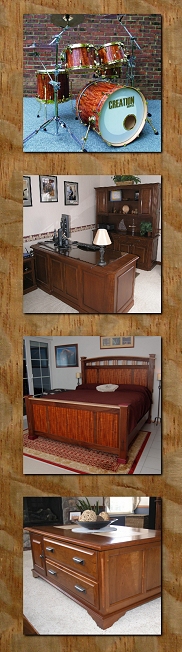 Veneer is a thin piece of wood cut from a log with a slicing, peeling, or sawing machine. It is used on plywood, fine furniture, music instruments, jewelry boxes, humidors, cabinetry, automobile interiors, and more for decorative and architectural purposes. The most common raw wood veneer thickness is 1/42" to 1/45"... equivalent to approximately six sheets of printer paper. That is thick enough to prevent glue bleed-through and it allows the user to do some finish sanding to get a perfectly smooth panel surface.
Before a log is sliced into veneer, it is often steamed or cooked in a bath of very hot water. This process softens the log so that veneers can be sliced without tearing and splitting. After the veneer is sliced, it is pressed flat between heated platens to dry the wood. Then it is bundled into stacks in the same order or "sequence" that it was sliced from the log.
Veneer opens a whole new world of woodworking to even the most experienced craftsperson. With an exotic veneer, simple projects can be turned into works of art. In fact, a highly figured veneer can often be the qualifying characteristic that makes one project stand well above the rest.
Veneer gives you a unique opportunity to work with some of the most beautiful and exotic woods in the world without having to dip into your retirement account.
Wood veneer has several distinct advantages over solid lumber that can't be overlooked. It is these advantages that have brought the art of veneering into many professional cabinet and furniture shops. The good news is that with the right tools, veneering is relatively easy. And it has become a craft used by hobbyist woodworkers to turn even the most mundane projects into heirloom-quality masterpieces.
Our website is here to help hobbyist and professional woodworkers get into the craft of veneering. Be sure to check out the many how-to articles we've posted.
The True Beauty of Veneer
Stability - Some species of wood are simply unstable in lumber form. The unorganized grain in burl wood is beautiful, but it is prone to warping and splitting. By slicing a burl into veneer, wood movement is kept under control by the adhesive and substrate. Even the most unruly woods can be sliced into veneer and used to make a stunning, yet stable panel.
Economy & Availability - Many wood species are so rare and valuable that, in lumber form, they are simply unaffordable. There is a scarcity of fine logs available world-wide, and there is an ever-increasing demand for fine wood. That is a formula for a log that is worth ten times what it was 5 years ago. By slicing a log into veneer, the square foot of "face" material is increased by over 4,000% and a new economic value is created for these forest products.
This increase in value is certainly not limited to straight grain wood. Figured wood is subjected to almost unimaginable increases in value. As these logs are sliced and exported, wood users are going to see prices rise, quality drop, and large sizes become extremely rare.
Practicality - If you've ever seen a classic serpentine dresser, you probably understand the practicality of using veneer for curved work. But it's certainly not limited to fancy projects. Oak, cherry, walnut, and other hardwood plywood are more than just practical; they are absolutely essential for many woodworking projects.
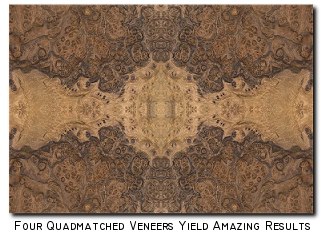
Layup Options - You can create some of the most beautiful kaleidoscope designs with a keen eye and a few sheets of sequenced veneers. Learn more about cutting veneers and getting a perfect seam by clicking here. Be sure to experiment with our Veneer Match Maker™ tool.
A Bad Wrap, Literally
In furniture making, the word "veneer" often brings to mind a lack of quality. This is especially true of projects created in the early to mid 1940's when fine lumber was scarce. Because of World War II, there was a shortage of good furniture craftsman, and the adhesives used for veneering during this difficult time were less than perfect. The problems with these veneer projects became obvious decades later, and by the mid-70's, the term "veneer" became synonymous with shoddy furniture.
Fortunately, this stigma has faded and veneering has become a top interest among woodworkers. This is largely due to the costs and scarcity of exotic wood. However, there's no denying that veneering techniques have become easier and much more mainstream. The processes which were once considered belonging to an exclusive group of craftsman, are now readily available on the internet, at the library, and through woodworking classes.
Veneer adhesives have improved by leaps and bounds too. These glues became more resistant to heat, water, and wear in the late 70's. Over the last two decades, new adhesive polymers have been developed to make veneer glue more affordable, easier to use, and non-toxic.
It's All In The Grain
There's a multitude of words to describe the various figures that are found in veneer. Here's a brief list of what you'll find when searching for veneer.
 Burl The most beautiful figure; burls have circles of random cell growth |
 Quilted A "high-end" figure with rolling iridescence in distinguished clusters |
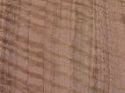 Curly Cross-grain ripples of shimmer where cell orientation is uneven |
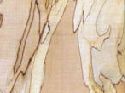 Spalted/Ambrosia Dark lines often caused by fungus or insects, rare in veneer form |
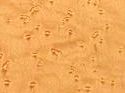 Birds Eye Dots of dense wood cells, a classic figure typically found in maple but can occur in other species |
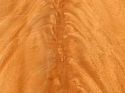 Crotch High shimmer, sliced where the tree has forked in two directions, requires a PPR veneer glue |
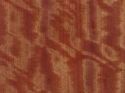 Mottled Angular rays of shimmer with sharp edges, highly iridescent and creates a bold statement |
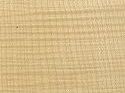 Fiddleback A higher density of the same figure found in curly woods, prized by most woodworkers for its character |
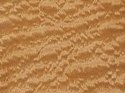 Pommele 'Pom-el-ay' Resembles rain drops cascading down a window, has a very eye-catching effect when finished |
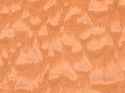 Blistered Similar to pommele but with a slightly larger figure and marginally less shimmer, common in sapele, rare in other woods |
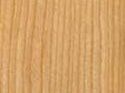 Quartersawn (Type of cut) Sliced to yield a very straight grain, some veneer species such as oak show shimmering flecks of light |
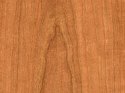 Flat Cut (Type of cut) This traditional cut creates a "cathedral" grain which is often compared to the look of solid lumber |
|
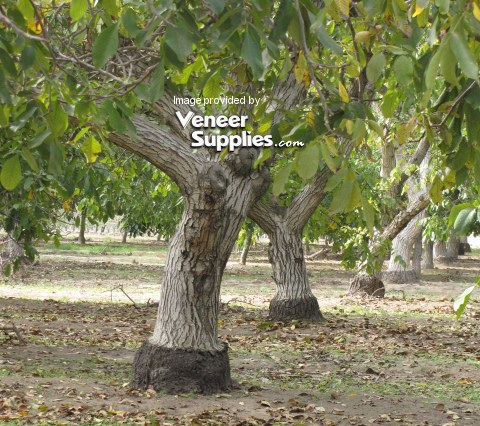
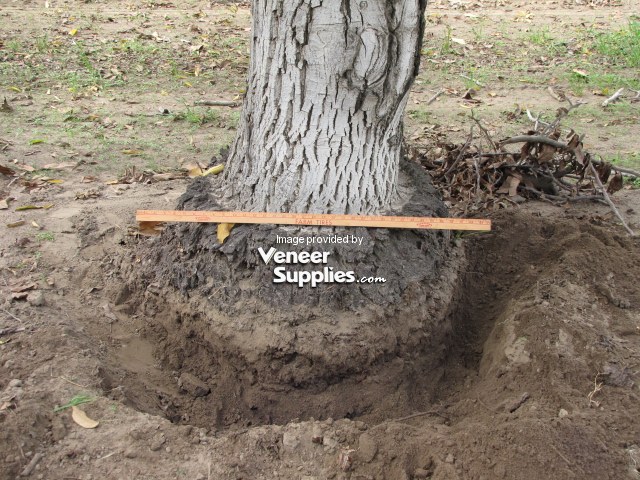
More Information About Burl Veneer A burl is sometimes just nature's way of making a band-aid. If you've ever tried to split a burl with a wedge, you know how strong the interlocking grain can be. A stress-induced burl is an effective means of patching courtesy of Mother Nature. Some burls such a madrone, redwood, maple, and buckeye grow below ground level or at the root crown (right at the ground surface). The most common root crown burl species is walnut, which is created by grafting European walnut to American walnut for the purpose of growing nuts on tree plantations. These trees have a limited production life, and when this span of time has concluded the trees are then harvested for their burl growth. Burls veneers can have any one of several different grain patterns, or a combination of patterns and figure. |
- The traditional pattern is sometimes referred to as "cat's paw" because of the circles of grain which sit side by side. This figure is the result of cutting the veneer from the outside face of the burl on a rotary slicing machine.
- When a burl is sliced from the side, it can have the appearance of "rays" or "straws" laid side by side. This is type of pattern is very uncommon due to the challenge of slicing this way and because the veneer tends to be extremely fragile. We have only seen a burl cut this way a couple of times over the last 20 years.
- Cluster burl is sometimes considered a lesser quality veneer. In this case, the veneer has patches of burl figure which are rotary sliced from the log. These veneers can often be used on projects where a true full-figured burl veneer would be too outlandish. When a subtle grain variation is required for a project, cluster burl will often do the trick.
Types of Veneer
Raw Wood Veneer - This is the most common veneer for exotic wood species and figures. It can be applied to a substrate with cold press veneer glue with a vacuum press or clamping press. If you prefer the traditional approach, raw wood veneer can be applied with hot hide glue and a veneer hammer. Raw wood veneers are considerably less expensive than backed veneers and they are available in practically every species and grain pattern.
Shop-Sawn Veneer - With a bandsaw properly set up, some woodworkers can cut their own veneer. These veneers are often thicker than mill-sliced veneers and they have as many advantages as they have drawbacks. See the chart at the bottom of this page.
Backed Veneers - Though not as widely available as raw wood veneer, these are usually available in large convenient sizes. Some backed veneers have wood or phenolic backing which are used for somewhat specialized applications, but the most common are those which are backed with paper. Paper-backed veneers are usually available in 10 and 20 mil thickness. This measurement is a reference to the thickness of the backing, not the wood face. To apply a backed veneer, a cold press veneer glue can be used in a vacuum press for a very durable bond. Contact cement can also be used. Paper-backed veneers are most commonly available in 4' x 8' sheets, though we offer them in several other sizes.
Staining and Finishing Veneered Projects
Since veneer is real wood, it will accept stains and finishes much like solid wood. The choices of stains and finishes are many, and each combination can yield a different outcome. Ultimately, it is up to you or your customer to decide which stain (if any) is best for the project. Testing with sample boards is highly recommended.
- Burl veneers are typically not stained. The natural colors and patterns in the burls are usually so beautiful that applying a stain would be considered a travesty by some woodworkers. However, walnut burl is sometimes stained with a medium to dark oil-based stain to enhance the richness of the walnut color without dramatically changing the tones.
- Curly, mottled, quilted, pommele, and bird's eye figures will often display their best shimmer without a stain. However, some dye stains will bring the chatoyance to its peak. The drawback is that you'll be changing the wood from its natural color. For example, most people will not stain koa veneer. The natural colors are brilliant enough and the shimmer comes through with even a basic top coat of oil-based polyurethane.
- Some wood species are a bit oily and this can pose a small problem for some water-based finishes. Oily species include bubinga, wenge, teak, and rosewood. For these species, consider using an oil-based stain and finish.
- There are many good water-based stains and top coats available, but for the most part you will find that oil-based stains and finishes provide the best color, depth of grain, and durability. If you choose to skip staining and just opt for a top clear coat, you'll find that oil-based and lacquer-based finishes provide a nice natural color without obscuring the grain. These finishes are great for visually "popping" the grain in figured woods.
- Regardless of which stain you choose, be sure to follow the manufacturer's instructions and allow ample drying time between coats.
Veneer Characteristics
| Shop-Sawn Veneer | Mill-Sliced Veneer | Backed Veneer | |
| Availability | If you have a properly tuned bandsaw, you can slice a piece of lumber into veneer. | There are several good veneer suppliers across the country. We have plenty of veneer to check out as well. | There are several good veneer suppliers across the country. We have plenty of veneer to check out as well. |
| Convenience | If you have the lumber in your shop, slicing off a veneer is just a quick bandsaw project away. | Convenient as long as you have a good source for veneer. | Very convenient if the project calls for a large veneer. |
| Cost | Inexpensive or even free depending on how you acquired the lumber, log, or burl. | Some species can be found for as low as $1 per square foot, but many exotics can reach $20 or more. Plan on spending $4 to $12 per square foot for good quality burl and other figured veneers. | More expensive per square foot than raw wood veneer but the convenience factor is especially high if you need a large sheet. |
| Opportunity | If you have access to a figured board or burl, you'll find it very rewarding to cut a veneer on your own. It is nearly impossible to find a mill to privately cut veneers for you. | The opportunity is as good as the source you buy your veneer from. If they have a wide selection of sizes and figure with reasonable prices, then you have a great opportunity to get your hands on mother nature's rarest woods. | The opportunity is as good as the source you buy your veneer from. If they have a wide selection of sizes and figure with reasonable prices, then you have a great opportunity. |
| Thickness | Most shop-sawn veneers are a bit thick. We suggest sawing no thicker than 1/24". Beyond that, you really do not have "veneer", you have thin lumber which requires a PPR glue to prevent veneer creeping. | Mill-sawn veneers are usually 1/42" thick. This is the ideal thickness because it maximizes the yield from the log without sacrificing the usability, durability, and quality of the veneer. | Backed veneers have a very thin face of real wood in which the actual thickness is not spec'd due to the sanding process that they perform to make the veneer perfectly smooth. |
| Sand-ability | Since most shop-sawn veneers are thicker, they can withstand a bit more sanding than a mill-sawn veneer. | Mill-sawn veneer allow some mild to moderate hand sanding. Since these veneers are sliced (not sawn), very little sanding is necessary. | These veneers are pre-sanded so you shouldn't have to do any sanding. If you do have to sand it, do so after if has been applied to the panel and proceed slowly with 180 grit. |
| Size | Shop-sawn veneers may be limited in size by the capacity of your bandsaw. | Mill-sawn veneers range in size, but they are often larger than what the average bandsaw can cut. | The most common size of a paper-backed veneer is 4' x 8', though some places offer sheets as large as 5' x 12' ft. |
| Adhesive | PPR glue only. Other woodworking glues do not have the strength to keep a thicker veneer from delaminating over several seasons of humidity changes. |
X-Press™ Veneer Glue |
|
| Application | Best applied with a vacuum press or with a large amount of clamps. Weights set on the panel will not keep a shown-sawn veneer flat while the glue cures. | A vacuum press is ideal, but other means of clamping can also work well. There are other options such as iron-on veneering that can also be used. | Use a vacuum press and standard veneer glue for the most durable bond. Or use a veneer scraper along with FSV glue or contact cement for a quick and easy option. |
 |
|
 |
|||||||||||||||||||||||||||||||||


All Content ©2026 VeneerSupplies.com™
Terms and Conditions | Privacy Policy | Contact Us