






Categories
- Raw Wood Veneer
- Paper-Backed Veneer
- Edge Banding
- Vacuum Press Items
- Veneering Supplies
Shop by
Veneer Species
Build Your Own Vacuum Press

Veneer Supplies Newsletter



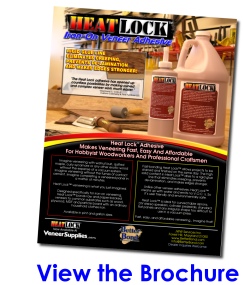
Better Bond Heat-Lock™ Veneer Glue





The Original "Heat-and-Bond" Veneer Glue
Heat Lock™ is the woodworker's solution for small or irregularly shaped veneering projects. Designed specifically for iron-on veneering, this adhesive bonds raw and paper-backed veneers to porous substrates such as wood, plywood, MDF, and particle board with an ordinary household clothes iron. Recommended for virgin surfaces only.
Simplified Instructions:
Apply a uniform coat to the substrate and the back side of the veneer. The substrate and veneer must be porous. Allow both pieces to dry. Then place the veneer onto the substrate and use a clothes iron (set on medium/high or the cotton setting) to "re-activate" the adhesive polymers. Place an old cotton or flannel shirt over the veneer face to prevent scorching, and then begin ironing from the center and work toward the ends of the veneer along the grain. It is best to avoid moving the iron across the grain.
Apply even downward pressure, giving the full veneer area ample time to heat up, reactivate, and bond. Keep the iron moving at all times. Allow an additional 1 to 3 hours for full bond strength. It's never been so easy to iron-on a veneer!
Detailed Instructions: Click here
Safety Data Sheet: Click here
Very Important Information about Freeze Protection See this page before ordering! |
Features
 No VOC's
- One year shelf life
- Spreads easily with a glue roller
- Water-based formula offers easy clean up
- Thick consistency helps prevent bleed-through
Typical Heat Lock™ Projects
- Table Aprons
- Edge Banding
- Drum Shells
- Humidors
- Electric Guitars
- Stereo Speakers
- Jewelry Boxes
- Small Table Tops
- Drawer Fronts
- Cabinet Refacing
- Cabinet Door Panels
Coverage
- Pint - approximately 20 sqr ft of veneer and 20 sqr ft of substrate
- Half Gallon - approximately 80 sqr ft of veneer and 80 sqr ft of substrate
- Gallon - approximately 160 sqr ft of veneer and 160 sqr ft of substrate
Notes
- A light application of Super Soft 2™ veneer conditioner will help minimize the potential for burl and figured veneers.
- Maple, bubinga, sycamore, East Indian rosewood, and some figured mahogany veneers tend to split when heat is applied, and therefore are not the ideal species for Heat Lock adhesive.
 The importance of applying this glue correctly cannot be overstated. Don't make the mistake of using a paint brush or paint roller to apply this adhesive. A dedicated glue roller is the recommended application tool.
- Heat Lock is not suitable for thick veneer, crotch grain veneers, or veneer inlays. We suggest Ultra-CAT™ adhesive for use with thick veneer and crotch grain veneers.
Simply apply Heat Lock to the back of the veneer, let dry, and then cut strips from it to make suitably-sized edge banding. Be sure to allow some extra width to make alignment easier. If your panel is 3/4" thick, cut the strips to 7/8" or 15/16" wide. When ready, apply Heat Lock to the edge of the panel and then use a clothes iron to apply the custom-made edge banding strips. Then remove the excess material with an edge trimming tool.
Questions & Answers
What should I know about Heat Lock?
Heat Lock takes only a small amount of practice to master. I recommend experimenting with veneer scraps before tackling your first project. Be sure to keep the iron moving at all times and, of course, be careful to avoid burning yourself. A cotton or flannel tee shirt between the veneer face and the iron will prevent the veneer from scorching. Book-matching or any other veneer seaming technique can be difficult with Heat Lock due to the method of application. More information about this can be found further down in this list of questions and answers.
Can I use yellow glue for iron-on veneer as well?
There are many websites that say you can use yellow glue for iron-on veneering. I find it so disheartening that anyone would deceive their audience, but it seems to be common on the internet these days. They make a 60 second video, post it on YouTube, and now they are an "expert" who mislead hundreds or maybe housands of people. What a shame. While you can use a clothes iron to re-activate yellow glue, the one thing you don't see in those tutorials is what happens one season later when the ambient humidity changes and the wood cells in the veneer shrink or expand. When this happens, the yellow glue lets the veneer move. This is often called "cold creep". Yellow glue can allow the veneer edges to lift and the center parts of the veneer either crack or bubble depending on the direction of the humidity change. Heat Lock glue dries much harder so the cold creep simply does not happen.
How do I apply Heat Lock?
A glue roller is the most ideal tool for spreading this adhesive. Please click here to learn more.
Should I seal the substrate surface before applying Heat Lock?
No. Like all water-based adhesives, Heat Lock only bond to a porous surface. A sealer will prevent Heat Lock was getting a "bite" on the substrate.
To what kind of surfaces will Heat Lock bond?
Heat Lock will work with a variety of virgin substrate materials such as wood, plywood, MDF and particle board if the surface is porous. Some substrates can be made more porous by scuff sanding with 80 grit sandpaper. You can test the porosity of the substrate by placing a few drops of water on the substrate. If the water is not quickly absorbed by the substrate, you may find that the Heat Lock glue will not work. Surfaces top coated with shellac, lacquer, or polyurethane (all of which make surfaces non-porous) will not bond with Heat Lock.
Is Heat Lock suitable for non-virgin substrates?
Non-virgin surfaces are those which previously had a stain, finish, top-coat, adhesive, or other chemical applied to the surface. These chemicals often can not be removed and will impact the integrity of the bond regardless of how much sanding is done to the substrate. Heat Lock is not recommended for non-virgin substrates.
Will Heat Lock work on large projects?
This adhesive is designed for small and medium size projects. It will work on large projects, but doing so requires a lot of time and effort to iron the large surface area. Vacuum pressing with a cold press adhesive is ideal for larger projects, or instead consider using paper-backed veneer and contact cement.
What wood species does this glue work with?
We have tested Heat Lock with 60 different species of wood and achieved excellent results on nearly all of them. Even oily woods like teak respond well to Heat Lock. The only raw wood veneers with some issues are bubinga, East Indian rosewood, figured mahogany, maple and sycamore. Any veneer that has a highly acidic pH may also not be suitable for use with this adhesive.
What kind of wood grains are compatible with Heat Lock?
Do not use this adhesive on crotch grain veneers since the extremely dense wood cells in this type of veneer do not respond well to heat. Burl veneer might be the best grain with Heat Lock. The interlocking and non-directional grain pattern in a burl typically allows the wood cells to respond to a bit of heat without splitting or cracking. Quilted, curly, bird's eye, and flat cut grain veneer can be spritzed with a light coat of veneer softener (immediately before ironing) to minimize splitting near the edges. If softener is applied to the veneer, do the ironing process in a well-ventilated area.
Why are crotch grain veneers not suitable for use with Heat Lock?
Crotch grain veneers do not like changes in moisture content. These changes occur through the addition of moisture from the glue and the fast removal of moisture from the heat of the iron. Also, crotch veneers have a lot of "strength" in their ability to expand and contract even after the glue has dried which can cause cracking and "crazing". For this reason, even cold press glues are typically not suitable for crotch veneers; a rigid-setting adhesive such as Ultra-CAT is the key to success.
Is Heat Lock moisture and heat resistant?
This adhesive is largely unaffected by occasional exposure to moisture if the veneer was properly bonded. To the best of our knowledge, Heat Lock can withstand up to 170° F after it has fully cured.
What filler can I use if my project surface has gouges in it?
Wood fillers typically create a non-porous surface. The problem is that water-based adhesives do not bond very well to non-porous surfaces. When the filler area was minimal, I've had success with both Bondo and with Elmer's "Stainable" wood filler. I've also had success with Durham's Rock Hard Water Putty on somewhat larger substrate defects. Be sure to scuff sand the filled areas with 60 or 80 grit paper to get maximum bond strength.
What is the shelf life of Heat Lock?
If stored in a cool (but not cold) and dry location, the shelf life is 12 months.
Do I have to apply the adhesive to the veneer and to the substrate?
Yes. The adhesive will not bond correctly if the adhesive is not on both surfaces.
Can I use this glue even if it is beyond the shelf life?
That is a risk that you have to be willing to take. I would not recommend it and I would not use an expired adhesive for my veneer projects. Typically there are no visual indicators that a glue has exceeded the shelf life and is not suitable for use.
What tools do I need to use Heat Lock?
In addition to veneer, substrate material and the HL adhesive , you'll need a clothes iron, glue roller, and a small piece of cotton or flannel cloth. You may also find it helpful to have masking tape available.
Do I need to do a practice sheet first?
Yes! Absolutely yes! It’s always a good idea to do a test panel with some scrap before you begin the main project.
Will Heat Lock work on thicker veneers?
This adhesive is not suitable for veneers over 1/42". We suggest Ultra-CAT™ adhesive for use with thick veneers.
Will Heat Lock work on plastic laminate?
Like all water-based adhesives, Heat Lock will not bond to a non-porous surface such a plastic laminate.
Can I apply a veneer over top of another veneer?
It is almost never a good idea to apply veneer over another veneer. The best practice is to remove the old veneer first. Keep in mind that you need to get down to a porous surface since water-based glue will not bond to a non-porous surface such as one that previously had glue applied.
How much heat is needed to bond a veneer with Heat Lock?
Bonding is best done with the clothes iron on set to medium/high. On some irons, this will be the "cotton" setting.
Should I enable the steam setting on the iron?
No.
Can I use Heat Lock for seaming two or more veneers together?
Book-matching or any other veneer seaming technique can be very difficult with Heat Lock™ due to veneer shrinkage from the heat of the iron. However, there is a possible "work-around" for the problem. To solve the shrinking problem, you can place a straight piece of clothes hanger wire about 2" away from the seam. Then iron down the seam and a good portion of the veneer on the other side of the hanger wire. Next, pull the clothes hanger wire out and iron down the bubble that it left behind. This will help to force the seam tight. This technique requires a bit of practice, but it does work well once you get an idea of how much shrinking will occur from the iron.
Do I have to move the clothes iron in a certain direction when applying the veneer to the substrate?
It's best to move the iron in the direction of the grain. Generally speaking, it is not advisable to move the iron across the grain. Burl veneers often do not have a grain direction so the iron can be used in any direction.
Should I use veneer softener when ironing the veneer?
In many cases, yes. Veneer softener makes wood cells pliable and allows them contract and expand without separating and thereby causing a split.
Is it ok if the veneer is wavy or rippled before I apply Heat Lock?
The veneer should first be flattened with veneer softener and allowed to fully dry before applying this adhesive.
Will this adhesive work with paper-backed and two ply veneers?
Heat Lock will work very well with paper-backed veneers if the backing is first scuff sanded with 80 or 100 grit sandpaper. However, two-ply veneers have a tendency to be problematic because the extra layer of wood on the back of the veneer insulates the glue line from the heat of the iron and therefore, this product is not recommended.
Can I cut small strips of veneer to make custom edge banding?
Yes! Heat Lock is great for edge banding. It is often best to apply the banding before the veneer is applied to the top of the panel.
Should I veneer both sides of the panel?
Most panels will warp if both sides are not veneered. This is a phenomenon that affects all forms of veneering including vacuum press work.
Can I use Heat Lock to repair a piece of damage or lifted veneer?
Veneer has a tendency to shrink from the heat of the clothes iron which will leave a gap between the edge of the damaged/delaminated veneer and the edge of the original veneer. Also, this adhesive is designed only for use with virgin materials. The best option may be to use BetterBond X-Press veneer glue and place some weight on top of the delaminated veneer while it cures.
My project is fairly large. How much coverage can I expect from a pint?
A pint size bottle of Heat Lock will cover approximately 20 square feet of veneer and 20 square feet of substrate material.
When I applied the adhesive, my veneer started to curl up. What should I do?
Before applying Heat Lock, it is best to tape down the edges of the veneer to a piece of cardboard. Leave the veneer taped down until the glue is set and the panel is ready to be heated.
How soon can I use the panel after it has been veneered?
It's best to let the adhesive fully harden before staining/finishing the veneered surface. This normally takes a few hours.
What is the maximum time between when Heat-Lock is applied to the substrate and when it is ironed on?
Generally speaking, you have no more than 3 hours to use the veneer once the adhesive is applied. This can vary from one species to another and it also depends on the shop humidity and temperature.
What kind of finishes can be used on a project that has been veneered using this adhesive?
Since Heat Lock cures hard, you can use shellac as well as water-based, oil-based, lacquer-based, and alkyd-based stains and top coats. Do not flood the surface with the first coat of finish. Apply a light coat and allow it to dry. Then proceed with heavier coats of finish as needed.
Can I use a water-based stain and/or topcoat with Heat Lock?
If the bond is strong between the substrate and veneer. A water-based finish should be no problem. Once the Heat Lock glue is dry, water will not affect the bond strength. However, if the bond is not adequate (caused by lack of glue or heat), a water-based finish can cause bubbling since wood cells expand with water. If you must use a water-based finish, allow the panel to cool down from the ironing process and then lightly spritz the entire project with water. If the bond is poor, the water will cause any loose or poorly adhered areas to bubble up. You can sometimes reheat the panel within 24 hours of application and get the glue to re-stick and the bubbles to disappear.
Can Heat Lock be used for marquetry projects?
It's probably not a great idea. The heat from the iron can cause the veneers to shrink which could allow gaps to form between the pieces.
What is the maximum amount of heat this adhesive can withstand once it has cured?
For most species and substrates, Heat Lock can maintain the integrity of the bond up to 160°F.
My veneered panel has some bubbled areas on it. What should I do?
Bubbles are caused by poor adhesion between the veneer and the substrate. This often occurs when an inadequate amount of adhesive is used on the veneer and substrate. To avoid this, it is highly recommended that a dedicated glue roller is used to apply the adhesive. Bubbles can also be caused by lack of heat from the iron. It is important to work slowly and methodically when applying the heat to the veneered panel.
To fix a problem area, cut a fine slit into the bubble and inject a bit of Heat Lock inside. Allow it to set up for several minutes and then iron down the imperfection. If your panel already has a finish applied, you will not be able to use heat to re-activate the bond. After 24 hours, the cross-linking polymers in Heat Lock have fully set up and are much less re-activatable with heat. In this case, use this process to flatten the bubbles:
- Slit the bubble and inject a small amount of Heat Lock inside using a glue injector.
- Massage the bubble to work the glue around inside. Immediately wipe off any excess that comes back out of the bubble.
- Place a piece of wax paper over the bubble and then place a piece of 3/4" plywood (8" x 8") on top of the wax paper.
- Put at least 20 lbs of weight on the plywood and let the glue cure for 6 hours.
- Remove the weight, plywood, and wax paper.
- Gently scrape off any excess glue that may have squeezed out of the slit from step 2 above.
After my project is veneered with Heat Lock, can I reactivate the glue area to remove a veneer?
The cross-linking polymers in Heat Lock (which are what makes it so durable) start to set up within a few hours after the veneered panel has dried. Once this happens, the glue is not nearly as re-activatable with heat. While I suspect a clothes iron can create enough heat to allow removal, I doubt most pieces of veneer could withstand that much intense heat and would not come off cleanly.
Can Heat Lock be removed from a substrate if I want to change the veneer?
When used carefully, a heat gun and a sharp-edged putty knife can often be used to remove most of the Heat Lock adhesive from a panel.
Can I use Heat Lock to bond PVC edge banding?
Heat Lock only works on porous surfaces. Since PVC is not porous, it will not work.
Can I use the Heat Lock glue in a heated dry press?
Yes. If you have access to this type of press, Heat Lock can be used. We have been told by Heat Lock users that 150-180° for seven minutes works very well.
Is Heat Lock freeze/thaw stable?
This adhesive is not usable if it is allowed to freeze. Once frozen, it turns to a solid lump of rubber.
Can I remove a veneer applied with Heat Lock and apply another coat of this adhesive for a replacement veneer?
Like all water based adhesives, Heat Lock requires a porous surface to make a bond. You will need to sand off the old veneer and the layer of Heat Lock. The substrate surface must be porous (I can't stress this enough) so this may require very coarse sanding to get below the surface of the first coat of adhesive.
Is there a way to remove excess glue from the veneer?
Glue that has cured on the outside face of the veneer can be removed with Minwax Antique Furniture Refinisher. Apply it conservatively and will soften it up and allow you to remove the adhesive with a scraper.
Where can I find a chart that shows all of the Better Bond veneer glue differences?
This downloadable adhesive chart shows all of key points about each of the Better Bond veneer adhesives and may be helpful when choosing a glue for your next veneering project.
Do you have any videos of the product being applied?
Heat Lock is very easy to use and the instructions provided with the glue are easy to follow, so a video is not needed.
It depends on many factors. If the veneer is larger than the panel, a router with a down-cutting flush-trimming bit is preferred by many users. If the whole panel is oversized, then it can be trimmed to size with a sharp, high-tooth-count blade (typically called a plywood trimming blade).
Product Reviews
-
Works Really Well, Probably Best for Thinner Veneers
Review by Benjamin Blanco
Rating:
Seems to work really well. It is difficult to tell whether you have enough glue on the substrate, and it seems to vanish from the edges somehow, every time, even when applied (too) heavily. I just put a bit on my finger and apply manually in those areas. Then I end up having to wait extra long for those spots to dry, but it seems to work well that way.
First couple tries I'm not sure if I didn't apply enough glue, or I didn't apply enough heat, but in some spots the veneer edges didn't hold tight to the box. It isn't a perfectly flat surface, so I figure it was lack of glue. I fixed by applying wood glue and clamping, no problem.
After that, I applied more glue and moved the iron much slower. Stuck like cement, no more edge issues. I did notice the 2-ply veneer started delaminating on the parts I trimmed off, so maybe I applied a bit too much heat. But the attached veneer did not...hopefully it stays that way.
[VeneerSupplies.com Note: We highly recommend applying this adhesive with our glue roller. Otherwise, it can be difficult to apply the right amount of Heat Lock to the veneer and substrate material. This customer did not include a roller with his order and that may have contributed to the issues.]
-
Impressive Glue - Strong Bond
Review by James Belliveau
Rating:
This a great veneer glue for beginners like me. I started with a couple of pints for a window bench project with walnut veneer. But the veneering process was so intuitive for me that I ended up getting much more involved in it. I just ordered a gallon and expect it will arrive as quickly as the first order. The instruction sheet that comes with it is very helpful so don't throw that out.
I did have a few questions and the owner of this website was eager to help. He probably answered a half dozen questions over 3 emails message. The customer service here is top notch. You don't find that much these days.
Also, get the glue roller that goes with Heat Lock. I tried using a paint roller and that did not go well.
-
Heat Lock Works Great
Review by Christopher Garrod
Rating:
The order shipped quickly and was going to Boston in the winter so the freeze protection was tested successfully.
This is my third order of Heat Lock. Over all a great method, especially for large areas. Be sure to use the roller they sell and don’t put down too much adhesive as it will have rolls/hills (learned the hard way). Also, you may want to stagger application times if a surface absorbs quicker than another so it doesn’t over dry on one surface.
-
Great Product
Review by Barry Stewart
Rating:
Pretty thick stuff, kinda hard to spread evenly - but works great. It's quicker and easier than I expected. My first shot at veneering and the project turned out perfect. The folks here are very helpful, and I highly recommend them.
[Note from Joe: This customer did not order the glue roller we offer, which makes it very easy to spread Heat Lock.]
-
Cherry Paper Backed Veneer on Speakers
Review by John Jarvis
Rating:
This stuff is really amazing. It made my speaker build project, a C-Note kit, a breeze (and I have never used veneer before this project). I used paper backed cherry veneer on MDF and it turned out great. Make sure you get great glue coverage for both the MDF and veneer, and take your time, but be careful, with the iron. This is the only glue I will use if I do another veneer kit. I used 3/4 of the pint to cover both speakers and veneer. Read the instructions provided. They are important.
-
Great Option for Veneering
Review by Jay Malcynski
Rating:
I purchased this glue to use for veneering speaker boxes because it was the logical choice for use on a finished box. It was easy to apply with a glue roller and dried quickly and uniform. A regular iron is all that it took to secure the veneer. It is now my method of choice for veneering finished pieces.
-
Excellent Results with Heat Lock
Review by Gabe Ruben
Rating:
My project was a vintage stereo cabinet that was completely stripped and re-veneered with mahogany that I bought here. The Heat Lock glue worked very well and seems like it made a solid bond. I couldn't be happier with the outcome. Much appreciation for this company. They handle customer questions very quickly and are super quick to ship. This is how a small business should be run! Congrats!
-
Great Product for a Novice (or Professional)
Review by Randall Westgren
Rating:
My first time using Heat-Lock glue with paper-backed veneer. But the instructions are very easy to follow and the product is very forgiving during application. It didn’t matter if I let the glue cure two hours or overnight, the iron-on process was easy. No panic for a newbie! The product adhered perfectly and clean-up was simple and easy.
Finally, the order arrived within two days, carefully packaged and well protected during shipment. Outstanding service!
[Note from Joe: It is not a good idea to allow the glue to set up for more than six hours before ironing.]
-
Excellent Product
Review by Paul Achitoff
Rating:
I used this glue for my first-ever veneering project, a pair of speakers, along with walnut veneer and a glue roller purchased from this site. The shipment arrived within a few days and was well packaged. Very detailed instructions were included, which I appreciated. The veneering process went smoothly, and I'm very happy with the result. The roller made uniform application of the glue very easy, and the glue was dry within about an hour. Ironing over a cotton T-shirt made the veneer adhere very well (paying special attention to corners is a good idea). No bubbles. Not sure how it could have been a better experience.
-
My Go to For Paperback Veneer
Review by Greg Larsen
Rating:
I use this exclusively for paperback veneer. I have done several projects where I wrapped the veneer against the grain around a one a half inch radius. That’s not supposed to work, but I’ve done it flawlessly with Douglas fir and walnut veneers. My only fail was using it on non-paperbacked figured sapele. It didn’t like the heat from the iron.
-
Great Veneer Glue for Small Projects
Review by Eddie Kemper
Rating:
I am building jewelry boxes for my two daughters who really like walnut burl. I dont have a need for a vacuum press though. Bought a half gal of Heat-Lock and used it for the side panels and lids on the boxes. It all turned out well and I have more faith in my veneering skills now. Bought the glue and a roller on a Sunday - got shipping / tracking information by Monday morning and it was delivered on Tuesday. Nice work Veneer Supplies!
-
Would Recommend
Review by Crista Lee
Rating:
This product came as a recommendation by my son in law who works in the plywood field. It was easy to use and seems to have worked really well repairing loose veneer.
-
Far Superior Product
Review by Rich Ferrari
Rating:
Purchased Heat Lock glue from this vendor. I have tried many, and this is by far a superior product. I cannot imagine using anything else going forward. My purchase arrived quickly and well packed. Received a follow up email from the owner to make sure all I was satisfied. Outstanding Customer service, reliable, and trustworthy.
-
Great Results on Speaker Cabinets
Review by Brian Isaacson
Rating:
This is the real deal for smaller veneering jobs like speaker cabinets. Vacuum bags were out since it wasn't flat panel application. This was my first time apply paper-backed wood veneer and the results were great. It's so easy that it's almost foolproof. Application (with the glue roller they sell here) was ideal. When heating the veneer, there was little to no squeeze out at the edges. The bond was excellent all the way around the cabinets. The Heat-Lock was shipped quickly and was well packaged with a warmer to keep it from freezing. Great stuff and I'll be using again.
-
Heat Lock is Awesome
Review by Jacob Coleman
Rating:
The Heat Lock veneer glue is an awesome product especially for a small shop that does not veneer a lot and does not have a vacuum bag. Also one of the best customer service experiences I've had in my life, was contact about the delay (due to winter storm) and they packed a new heat pad in so it wouldn't freeze during delivery in the north east.
-
Sidelight Repair
Review by William Fridley
Rating:
This product worked great. I had to re-veneer a side light that goes with my front door. I wasn't sure how I would glue the veneer to a vertical surface that would allow me to adjust it slightly and not being able to use clamps. It really made the job easy.
-
Easy to Use
Review by Dominic Palarchio
Rating:
It was my first time veneering and this glue worked like a charm. It was the most economical option for a one off project. I thought I could get away without the super soft, glue roller, and downcut flush trim bit, but I would buy them both if another project comes up. I used a ski waxing iron and linen over the veneer. Everything adhered flawlessly.
-
The Best Stuff...
Review by Michelle Lee Silvermane
Rating:
I will never go back to any other type of veneer glue. This is the best stuff I have ever used. I bought a small bottle two years ago just to test it and none of those projects have delaminated. When I decided to do an all cherry and veneered door kitchen, this was the only veneer glue I considered.
-
First Time Success
Review by Dave Nelsen
Rating:
First time applying paper backed veneer to anything. I was able to move the veneer and reposition with the dried glue in place. I was hesitant to use other methods because once you position it, it's stuck. I did have an issue with my cabinet holding the glue properly. I sent in an email and got a response later that day that worked perfectly. Very helpful customer service. I will always use this product in the future.
-
Worked Great! Easy to use
Review by Michael Prebish
Rating:
The glue arrived in its cold protection packaging and was just cool to the touch so it did not freeze despite our local temps in the mid twenties. After waiting a day for the glue to get to room temps, I tried it out. The product was easy to apply and worked great. My first attempt using a heat reactive glue short of iron on banding and it was just as easy!
-
Makes gluing veneer easy and wrinkle free. Recommend buying a large container.
Review by Logan Vincent
Rating:
This stuff is great. I recently used it to bond a piece of MDF to white oak veneer. It worked great and my veneer looks really good with no wrinkles.
Follow the instructions they give and it should work well. It does take a bit of time to tack up before applying, so make sure to account for that. You might need more than you expect, so my advice is to buy a big container so you can apply liberally and not run out. I had to send out for another container when I ran out. The larger ones are better value anyway.
I do recommend pre-ironing the veneer like the instructions say so it doesn't result in flaking when it cools down. Buy a cheap glue roller because it makes applying much easier, faster and wastes less glue.
This makes gluing veneer easy work and I will likely use this for most projects now.
-
Conquering Curves with Confidence: My First Veneer Success with Better Bond Heat-Lock
Review by Sarah Stahl
Rating:
As a veneer novice, the thought of re-veneering an entire Stonehill Drinks Cabinet, with its daunting curved edges, doors, and drawers, seemed like a distant dream. But then I discovered Better Bond Heat-Lock Veneer Glue and its companion, the veneer softener, through Joe Woodworker. These products transformed what felt like an impossible project into an achievable adventure.
Residing in The Netherlands, I was initially concerned about the logistics of getting these products overseas. Joe, however, was incredibly transparent and proactive about the potential shipping challenges. To my delight, not only did the order arrive swiftly in the summer, but Joe also managed to find a more cost-effective shipping solution. This level of customer service alone deserves five stars!
Now, let's talk about the glue itself. To say it exceeded my expectations would be an understatement. As a beginner, I was able to re-veneer the entire cabinet, a testament to the product's efficacy and ease of use. Of course, it required a bit of practice, but the real test came with the concave curve on the doors, where my iron struggled to fit. Here, patience was key, and Better Bond Heat-Lock didn't let me down.
So, whether you're a beginner or an experienced refinisher, I highly recommend giving Better Bond Heat-Lock a try for your next veneer project. It might just be the game-changer you're looking for.
-
New to Veneer - The Outcome Built My Confidence!
Review by Matthew Nevels
Rating:
This was my first veneering project and I was quite nervous about getting things right. Heat Lock was recommended on several forums and it seemed accessible to someone new to veneering. I was unsure exactly how thick to spread it and how long to iron it so I tried with a small sample and found that it was easy to tell when there was enough glue and by pulling up gently on the edges I could tell when it always well adhered. From there my project went very well. I would have messed things up had I used contact cement for sure, Heat Lock made positioning large pieces of veneer so easy. I love the final outcome - I have no issues with internal voids or edges coming up. I will definitely use this again for future projects.
-
Excellent
Review by Lee White
Rating:
Heat-Lock is an excellent veneer adhesive.Works as advertised. I am a beginner and this product made my project easy to complete. I would recommend this product to anyone doing a similar project. Everything arrived on time and was packaged safely.
-
Amazing product, Amazing company!
Review by Kim Hanna
Rating:
I never veneered before. I was trying to save an old oak table from my mother's garage that was about 100 years old. Just the top surface was in not so great condition. Sanding it didn't seem to work well as there were too many deep scratches in it. I picked a veneer from Veneer Supplies and bought the Heat Lock. I followed the directions exactly and did the veneering process in my home basement. No odors at all, no mess. Use the suggested tools for the process. Specifically the roller and the veneer scraper. The results were amazing. Thank you for your instructions and selling these items. Everything I needed came from Veneer Supplies. It's so nice to buy these items from such a great company. I wouldn't go anywhere else form next project.
-
Happy with the Results
Review by Yu Kitamura
Rating:
After the extensive research for my first re-veneering project on vintage JBL L26 speakers, I decided to try this product because of the high reviews here and there.
First of all, the shipping was absolutely brilliant. I placed my order on Sunday and it was shipped on Monday morning then arrived on Tuesday (to NY.) It came with the paper instructions, which I also find very nice.
I didn't remove the old veneers from the speakers but carefully sanded with 120 grid as well as I made sure that the corners were all square by applying Bondo product. My new veneer was paper backed one.
For someone who hasn't done any veneering before, just like me, the most tricky part might be how much glue should be applied in order to cover the entire surface evenly. It took me one test to figure this out. The tip is to apply a good amount of glue, not too little. If you see the glue lines from the tube remain on the surface after rolling them, it means too little. If this happens, you can always apply the 2nd coat. I also ordered the glue roller which turned out definitely must to achieve it. So I strongly recommend to get the roller (like it says here, it's totally reusable too)
Once you have done the process above right, the rest is very easy. Regular iron, cotton cloth in between and ironing from the center as suggested. By simply following the instruction, I didn't get any single bubbles and the adhesion was very strong. I am really happy with the results, the straightforward processes and the great customer service here. Thank you!
-
Heat Lock is a Great Product
Review by Scott Wetterhall
Rating:
The glue works very well. I'm making 16 7"x21" panels for use on a chest of drawers. The butternut veneer and backing veneer I purchased from this site bonds securely. Butternut is used to offset the color and grain of the white oak I'm using for the chest skeleton.
This the only site I use for veneers and supplies. Great service and product. I fully recommend this website to others.
-
Excellent Product
Review by Thomas Stephenson
Rating:
First time and I'm amazed at how easy this stuff is to use. I'll be trying it out on a curved project next. It opens up veneering possibilities that were just out of reach before. Give it a try.
-
Heat-Lock Glue Review
Review by Jerry Miller
Rating:
I recently used this glue to attach a walnut burl veneer to a substrate. I have never used a "heat activated" glue before. It was surprisingly easy to work with, and so far it has held superbly. Cleanup was easy with just warm water, even though both water and soap is advised. I used it on a bullnose piece and it adhered to the veneer instantly upon applying the heat. I would recommend it to experts and beginners alike.
-
Easy to Use
Review by Rachel Hoffman
Rating:
It's a great glue to use if you don't want to get out the vacuum bag for a small to medium project. The instructions are there to help you, make sure to use them throughout the first process.
-
Great Product, Super Service!
Review by Stan Traas
Rating:
I had excellent results bonding some very gnarly veneer to MDF with no vacuum press. There were some shipping challenges due to unseasonably cold weather and Joe contacted me to let me know he would delay shipping until confident that freeze protection would work. Superb service from a business that does [care] about their customers!
-
Heat Lock Glue, Awesome Stuff!
Review by Michael Beck
Rating:
This product works very well. I had never used veneer before, I jumped in the deep end with this project. Three speaker enclosures, and they weren't small. I learned with mdf that the ends would soak-up the glue a lot and needed a second coat. Wish I could attach a picture, they came out great!
-
Amazingly Strong Bond
Review by Mark Joiner
Rating:
When applied and used correctly, this stuff is amazingly strong. I had a dickens of a time removing a poorly-positioned piece of veneer, as this glue just didn't want to let go! Highly recommended.
-
Would Buy and Use Again
Review by Alan Harp
Rating:
It's a great glue for doing iron on veneering process. Dries pretty quickly so you can start the ironing process in just a few minutes. Definitely would buy and use again.
[Note from Joe: The glue must be allowed to dry before ironing and in most cases, this takes longer than a few minutes.]
-
Great Product
Review by Seth Morgulas
Rating:
Fantastic veneer glue. I use a wide plastic scraper to spread and then follow with a glue roller to get even coverage. Works perfectly with great adhesion, easy cleanup, and fast drying time. I use this every time on parts that are not suitable for cold press.
-
Extremely Satisfied
Review by Ian Webster
Rating:
First time using this product - I've only ever (once) used a PSA paper backed veneer before. Watched a couple of youtube videos then went for it. Extremely satisfied with the results.
-
Very Impressed
Review by Richard Purzer
Rating:
Stuff is incredible. I applied it according to manufacturer's instructions, only to discover that my clothes iron had stopped working. So a full three days later, my tester veneer samples had all curled up, but a spritz of veneer softener, a new iron set to 193 degrees, and they unrolled and adhered perfectly to their plywood substrates. Just to see what would happen I ran the samples through my table saw with a crosscut blade, and the veneers cut perfectly, not a chip or failure to adhere anywhere. Despite a 3-day delay between applying the glue and heat-activating it. And letting my veneer samples get all curled into tubes as the glue dried. So, perfect performance despite not following any of the manufacturer's instructions.
[Note from Joe: Though I very much appreciate this customer's review, I am worried about the panels he made. Heat Lock has some cross-linking polymers that "lock" together after 24 hours. The bond strength is exceptional when that happens, but polymers do not unlock with heat after the 24 hours window, so the bond would not be very strong on his panels. I was hesitant to allow this review here because bonding the veneer after three days is just asking for trouble.]
-
Excellent Bond
Review by Julie Justham
Rating:
It was easy to us. The instructions were detailed. I restore vintage trailers and need to veneer cabinet faces. I'm in AZ so the cabinets sit in the hot sun and contact cement didn't always give great results on larger pieces. I used this on a large cabinet for a curved corner. Due to an unexpected windstorm the cabinet blew over and collapsed but the veneer held strong.
-
Heat Lock is the Real Deal
Review by Robert Wexler
Rating:
This stuff is the real deal, a game changer actually. Wish we had a local supplier in Canada, but you guys do a great job with shipping so thank you.
-
This Was My First Veneer Project and It Worked Like a Charm
Review by Daniel Valverde
Rating:
I can’t tell how different it is than yellow glue other than having a raw wood-compatible coloring, but it goes on easy and behaves well. Definitely use the veneer glue roller, and buy it here—you won’t find it elsewhere. Just make sure you order it at the same time as all your other veneer supplies—shipping is super fast, but very expensive for small items.
[Note from Joe: The shipping cost is whatever the carrier charges us. We don't make a penny from shipping. We have negotiated a discount with the carriers and we pass that savings on to our customers to help reduce shipping costs.]
-
Excellent Product - 5 Stars
Review by Riad Miah
Rating:
This product was excellent for glueing down veneer I purchased from Veneer Supplies. The product is very easy to work with and does the job it is suppose to do. I decided to build a guitar from a kit. I wanted a good looking veneer on the front and back of the instrument. After purchasing the product I became aprehensive about using it because I never worked with it. For a first time use it was super easy to work with if you follow the directions. I used this product in combination with Super-Soft Veneer Softener and it work like a charm. The veneer sits tightly to the body of the guitar and does not show and glue or imperfections from the process. I used a foam roller to spred a thin layer of glue on both surfaces. I would use this product again without giving it a second thought.
-
Great Product for Veneering in Place
Review by David Pisani
Rating:
I'm veneering in place on pre-existing recessed panels in a bay window surround. Heat-Lock worked very well, even overhead! Easy to apply the product, it is viscous enough to prevent drips from the overhead and very good adhesion when heat is applied.
[Note from Joe: I do not recommend applying veneer on over-head surfaces, but I'm glad it worked for David.]
-
This Could Get Sticky
Review by Jeff Champlin
Rating:
This stuff works well. Highly recommended. Just order more than you think you will need. Works great on the paper backed veneer. Used with quartersawn white oak.
-
Worked Absolutely Perfect
Review by Bob Lufburrow
Rating:
I am new to veneering, followed the lead of Joe's website and used both the X-Press and Heat Lock Glues and they worked absolutely perfect - and that veneer glue roller is an excellent $12 investment as well!!!!
-
Easy to Use
Review by Jim Patterson
Rating:
I've had two prior experiences with veneer. With the first I used a well reviewed spray-on adhesive. Ruined the veneer. The second I used good old fashioned contact adhesive. Stuck great except I got a wrinkle in the veneer. Ruined that one too. On Joe's advice I bought this product. It came with a very clear and easy to follow instruction sheet. Wow! What a difference! This stuff is gold for beginner types like me. The only downside is I have to buy a new iron for my wife. I'm keeping the old one.
-
Heat Lock is Wonderful, and Joe is Great to Deal With
Review by Ed Gillott
Rating:
Without a vacuum press and needing to veneer a curved surface (with birdseye maple), I tried the Heat Lock glue. It was great! Good solid bond, pretty easy to use if you follow the directions. Have since used it some more, always with good results. I did need to pre-heat some grainy walnut and make sure to not use too much heat (else some small splits develop as on my test piece). But I’m certainly going to keep using this system.
And Joe is great to deal with. And his veneers are wonderful - high quality and exactly as described.
-
Works as Described
Review by Thomas Klotz
Rating:
I had issues with my burl veneer cracking when I didn't pre-iron the veneer. Follow the directions and practice on a test piece! I would also recommend the glue roller on the site which provides a nice, even coat.
-
Very positive transaction from Veneer Supplies
Review by Andrew Erard
Rating:
Product shipped the next day, the packaging was outstanding. Instructions on how to use this product was included in packaging and were very easy to follow. No caustic fumes like contact cement and a very strong bond. This was my first time doing a veneer job and the project turned out awesome. Couldn't be happier with the whole process. Communication was hands-down the best I've ever received from any online purchase.
-
Really Nice Product
Review by Jason Berryhill
Rating:
Performs as advertised. Applies easily - especially with the veneer glue roller we purchased. We opted for the cold weather delivery and the packaging was professional and effective. Really appreciate doing business with Veneer Supplies.
-
Love it!
Review by Mark Hickler
Rating:
This product solved a major problem. I build banjos and have to put veneers on the curved surface of a banjo rim. With contact cement it is too easy to make a mistake. With Heat Lock I can line everything up and then use heat and pressure. Fabulous!
-
Great Glue!
Review by Ryan Kent
Rating:
Great glue for all jobs big and small. It is really easy to use and I didn't feel rushed to complete like when using other glues. Can't speak for durability yet, but appears to be strong.
-
Great Product
Review by Calvin Mathes
Rating:
Easy to use and awesome results. For anyone that does not have a vacuum press and wants to take their project to the next level with exotics or burls. This is my 4th bottle and I highly recommended it.
-
Should Have Tried Heat Lock First
Review by Richard Reid
Rating:
Why didn't I try this first. Heat Lock is the last glue I've tried. I wish I would have started with it. I've tried many different veneer companies, Veneer Supplies has given me the best results. Always personable, helpful and expedient.
-
Good Stuff
Review by Dennis Glass
Rating:
This is good stuff! Clear directions and easy to use. I glued some zebrawood veneer to walnut and let it set until the next day. When I tried to remove the veneer it was evident how well it works!
-
Works Great for Edging
Review by Sean Lambkin
Rating:
As a professional furniture maker, what I use this for is primarily edging. I do a lot of custom veneering in woods that doesn't come standard as "edge banding". Also, many of the edges that I use this product for are over 3/4". The project I'm working on now has an 8" seamless edge. It works fantastic for surfaces that you can't put in your veneer press first. You "can" seam long veneer joints with this, but it takes quite a bit of practice as the veneer shrinks unevenly as it is ironed. I would trust this product over pre-glued iron on veneer edge tape. Period. That stuff only lasts a few years before it starts to peal off. Seen in happen many times.
-
The Answer for My Entry Way
Review by Bob Singleton
Rating:
The Heat Lock veneer adhesive was the answer for my entryway wall. I’d tried using carpenter’s glue. The veneer came loose when I put on the sanding sealer. The Heat Lock kept its seal and after staining and applying lacquer the veneer I fixed looks just like the other 100 year old pieces that surround it.
-
Great Stuff
Review by Michael Minton
Rating:
This stuff is great. It is incredibly easy to use and to clean up. Be careful not to overheat veneer because it will shrink. Also, use dowels or a piece of paper as you are aligning, because even when "dry" the pieces might stick.
-
Really Great Product
Review by James Good
Rating:
Really great product. Makes raw wood veneering stupid easy with a roller and a veneer saw. Perfect for veneering MDF speaker cabinets. Nice sharp edges.
-
Heat-Lock Review
Review by Chuck January
Rating:
My first time using Heat-Lock has made me a believer. It worked flawlessly and will be my go-to adhesive for future veneering projects. Veneer Supplies for wonderful to deal with. Very prompt and attentive.
-
Works for Me
Review by Dan Hardin
Rating:
I'm an amateur who veneers vintage Hi-Fi speakers and turntables, and don't own a vacuum set up. After several failures with cold press glue - panels loaded up with clamps and 300# of ballast would still bubble and curl - I gave hot press a chance. Voila, not only do I have a bunch of success stories now on appearance, the hot glues process is much quicker. I can complete most projects in a day, instead of day(s).
-
Great Product!
Review by Philip Gruppuso
Rating:
This glue functioned exactly as described on the website. It's wonderful! I was able to veneer curved surfaces without a hitch. I'm sure the result was better than I could have achieved with regular PVA glue.
-
Very Happy with Results
Review by David McMichael
Rating:
Applied one coat of glue to substrate and veneer as directed using a glue roller. Let it dry to the touch and ironed it on with my iron set to 5/6 and used a single layer of t-shirt cloth to iron through. I think it turned out excellently, though I don't have any other application methods to compare it to. The project is only about a month old now but for what it's worth it has held well. I do recommend inspecting the edges after the initial ironing to make sure you don't need a second round around the corners - those were tricky for me.
Overall very pleased, I'll continue to use it. It took about 1/6 of the pint to finish two 11x9x7 boxes.
-
Works Great...
Review by Steve Hansen
Rating:
Works great when applied as directed. Makes alignment of panels a breeze. Good adhesion with an ordinary household iron in a flannel "sock". Apply adhesive to veneer sheet before cutting to size to keep edges clean, keeping in mind the time frame for best adhesion.
-
Great Performance but Don't Let it Freeze!
Review by Alex James
Rating:
This is the best adhesive we have used to date. Very consistent and workable. Perfect for our students workibg with veneers for the first time. It is definitely worth every penny.
-
My Favorite Smaller Project Glue
Review by Ed Lindsey
Rating:
I live in the Sonora Valley where Better Bond Heat-Lock Glue makes hot weather veneering possible without worry of wrinkling. Summer open time tends to be about half of what is recommended. Adhesion is excellent too.
[Note from Joe: Heat does not affect drying time. It is ambient humidity that matters. A very dry environment will cause Heat Lock to set up faster. In many shops the air is very dry during the cold winter months because of the need for heating. In fact, a shop that is heavily heated but not humidified in the winter can be almost as dry as a desert environment.]
-
Five Stars
Review by Kenneth Richmond II
Rating:
Great product. Great supplier. Five stars!. Choose Better Bond Heat lock for all you projects. It is by far the best glue for for the best bond.
-
Heat Lock for Gluing Fabric
Review by Daniel Fusco
Rating:
This glue saved me big time on a project where we had to apply fabric onto an MDF center panel for a door. The contact cement would not work for this application because the fabric will never adhere straight. The heat lock glue worked perfectly for this and we were able to see exactly how the fabric laid out before we applied the heat from the iron for final installation.
-
So Easy to Use
Review by Dan Omalia
Rating:
This product is so easy to use. Just roll it on let it dry and then iron it together. Clean up is a breeze and the finished project is bonded tight and with edges that are perfect. My order was shipped and received sooner than promised. The veneer glue roller is a must and I wish I had ordered the gallon size. This is a great product and highly recommend it!
-
Easy to Use for Amateur Woodworkers
Review by Rick Snider
Rating:
This glue is an excellent product. It bonds well without any other tools or other supplies. As an amateur woodworker, I am very pleased with the results.
-
A Must-Use Product
Review by Vince Yurak
Rating:
We work with veneers every day and there's only one thing to say about this product. It is the best. Next to the veneer being pressed on your panel Heat Lock works better then contact cement. You have to get a veneer scraper from Joe to make sure the adhesion is at its max. Thanks for the same day shipping Joe.
-
Perfect for beginners
Review by Doug Dupont
Rating:
Really easy to use, even though it was my first time ever working with veneer. The only problem I had was when I didn’t wait long enough for it to dry and the veneer got stuck slightly off of where I wanted it. Which was totally my impatient fault. Great product!
-
Great Product
Review by Igor Smirnov
Rating:
Excellent product. Very easy to use. Better than what I used before. I recommend Heat Lock to everyone. I think you will like it!
-
Works Like Magic
Review by Larry Suchyta
Rating:
Built a couple speaker boxes and needed a veneer glue for a non-vacuum application. Used a 3" woven roller to spread the glue on both substrate and veneer per the directions and when dry pressed the veneer on with a veneer roller followed with a medium hot iron. Very happy with the results. Bond was excellent and have nice tight edges and sharp corners. The glue line is barely visible. Started with a pint to experiment and ended up buying another gallon. I'll be using this on future non-vacuum projects.
-
Must Have
Review by Steve Woodard
Rating:
I use this glue extensively for paper backed as well as unbacked and I achieve great results on both. I recently used it on some extremely old walnut and cherry veneer which had been treated with the veneer softener product (See my "Magic Juice" review) and had great results even on that. It's easy to use, very little mess and is perfect for someone like myself who loves to work with veneer but must do so on a limited budget, I would highly recommend that you at least try it once. I think you'll be sold with just one application...and...uh... a new iron for the wife.
-
New to This Glue
Review by Troy Harding
Rating:
This product is quite different than any other glue I have used before. I wasn't quite sure about how dry to let it dry but it seems that dry means dry. I ironed the veneer on last night and all areas seem very secure.
-
Great Glue
Review by Anthony Frazier
Rating:
This product is so much easier to work with than the other contact glues on the market. Plus it's very easy to clean up and you don't get a headache breathing the fumes. Instructions are very simple to follow and the results are awesome.Glad I found Joe’s website! I will definitely be coming back for all my veneering supplies, and probably check out some veneer as well.
-
Thank you Joe
Review by Calvin Mathes
Rating:
I am a one man shop in Georgia and have order this product multiple times. With this product and the links to Joewoodworker.com I have been able to take my design possibilities to the next level.
-
It's a Life (Wife)-Saver
Review by Robert Murrell
Rating:
I had a project putting oak veneer on horizontal and vertical beams and mistakenly ordered non-glued veneer. The beams were in place and it would have been nearly impossible to clamp the veneer while the glue dried. And using contact cement has always ended in disaster for me. I used a small trim paint roller with a very short nap to apply and even coat to both surfaces. And the glue is water soluble, so clean up was easy.
-
Essential for Custom Shop
Review by Bruce Daigle
Rating:
I have been using this product for over 3 years in multiple applications, I have used it with all veneers and backers. I have NEVER, EVER, not one single time experienced lift or bubble. I’ve used it on large surfaces with great success. I simply roll two coats with foam roller on each piece and iron on, I let it sit 1/2 hour before I trim. Allows me to build difficult shapes I can’t bag easy. Great product! Almost wanna keep it a secret!
-
Heat Lock Success
Review by John Colligan
Rating:
I used this product for the first time and on my first veneer project with great results. Joe was quick with any emails I had and I highly recommend this product especially for large panels and/or for people who don’t have vacuum equipment.
I’ll definitely be purchasing more!
-
First Time Veneering Success!
Review by Gerge Hoffer
Rating:
This worked great on the flat panels I did for a project. Quick and easy, excellent bond works as advertised. Highly recommended. Do get the glue roller. My shipment arrived well packed unfrozen although we had a cold snap 27 below zero. I took the freeze protection option. Joe maintains the most comprehensive and informative veneer site online that I have run across and a great product line. Answers emails in a timely manner, very helpful, knows his stuff. Thanks Joe. Keep it up.
-
50 Projects and Counting
Review by Bob Parker
Rating:
Heat Lock has been used in my workshop for at least 5 years (not the same bottle of course). I love that its made in the USA!
I dont have a vacuum press yet but sometimes I think there is no reason to get a system because this glue does everything I need. I've done high end speakers, jewelry boxes, and a $4000 dining room table with Heat Lock. There are at least 50 projects out of my shop with Heat Lock and I have not had a single call back from a client. Follow the directions carefully and do test panel first to get the hang of it. Follow this advice and you won't go wrong. I will update this review again after my next shipment of Heat Lock is used up.
-
Great Product
Review by Glen Armand
Rating:
Have been using this product for 5 years. Great product and consistent quality every time.
-
Review from New South Wales, Australia
Review by Michelle Brand
Rating:
I had never used this product before but was looking for an alternative to using hide glue. It does exactly what I was hoping it to do, totally takes the stress out of a complicated veneer glue up. Shipment was super fast to Australia and the excess shipping costs I paid were refunded quickly. I would totally recommend this product to anyone who doesn't have access to a vac press or has an irregular shaped job to veneer. I would also recommend this company in general, they provide an outstanding level customer service.
-
Review from Perth, Western Australia
Review by Geoff White
Rating:
Veneersupplies.com is a safe and honest website to deal with. I have ordered from them several times and the product has always been as described and delivered promptly. I have done several layups with this glue and it works as described; I am very pleased. Like other reviewers I bought the pint first and the gallon this time. I would recommend this site and this glue to a friend.
-
Review from Hackensack, NJ
Review by James Gartner
Rating:
VeneerSupplies.com has provided great service, extremely fast responses, and excellent customer service. They respond very quickly and truly make your order feel personal. I would recommend anyone looking for veneer supplies to check them out and give them a shot!
-
Review from Vancouver, WA
Review by Jim Fitzgerald
Rating:
I love this glue. Just getting into doing some veneer work and I thought I would give it a try. Got the small bottle first and it worked so well I ordered a gallon. Thanks Joe!
-
Review from Hesperia, California
Review by Ted Watson
Rating:
Great product for my re-veneer project. Arrived safely, on time, and undamaged. I would recommend this product and the website to anyone who is interested in quality products. It was a pleasure working with Joe throughout the order process and I hope to buy more products from this supplier in the future, as my project list expands.
-
Review from Eureka, CA
Review by Ed Brown
Rating:
I'm just beginning to work with veneers. I tried this stuff and it works beautifully. I'm going to do a floor, so I made a sample with Heat-Lock and put it at the front door. I just followed the instructions and it was easy to work. With no urethane or other protection I've been walking on it for two weeks, and it's still solidly attached.
-
Review from Chalfont, PA
Review by Erik Metz
Rating:
Thanks to Joe and his team for providing great products and the information necessary for your users. I was one of those that tried to glue veneer with traditional yellow glue using the same heat applied method with an iron. Not being satisfied with the process and results, I searched and found VeneerSupplies.com. The information regarding Heat Lock and the directions convinced me to give Heat Lock a try. Wow, what a difference. My veneers look great and the product works awesome. I feel like a professional and I am just a beginner with using veneers.
-
Review from Frankln, TN
Review by Bill Gentry
Rating:
Great product...I create large veneered picture frames both for myself and for sale commercially and am always looking for veneer adhesive that's easy to use and that holds up with no issues years down the road...Heat Lock is a winner and the great service from Joe and all the folks at VeneerSupplies.com is world-class. Product is as described, arrived in great condition when it was promised. In a time where we're all expected to do business with websites and rely on customer service provided by a computer, it's great to know there are still some businesses run by great human beings out there !! I"m sending all my woodworking buddies to VeneerSupplies.com for their veneer needs.
-
Review from Palm Coast, FL
Review by Gordon Hodson
Rating:
We had an old kitchen table that was in sorry condition and decided it would be a fun "family" project to remove the old veneer and glue on a new sheet. I found the Heat Lock because it was mentioned on a woodworking forum where another user said it was great for repairs. We bought a gallon because I thought a pint would not be enough but a pint would have been enough for our table which was 3'x4'. The veneer we used was paper backed walnut that we also got from this company.
The preparation was the hardest part since we had to do a lot of coarse sanding to get the old veneer and glue layer removed. Applying the Heatlock glue and getting the veneer ready was easy and it just took a bit of time and effort to get the iron around the whole surface but for sure the bond is as strong as I could hope for. Now we just need to put polyurethane on top. Even though this website does not sell polyurethane, the owner of the website was very helpful in sharing his thoughts about applying the poly. I thought that was pretty cool of him and I am looking forward to finishing the project this weekend.
-
Review from Winter Park, Florida
Review by Jim Philips
Rating:
This Better Bond Heat Lock veneer glue arrived within just a few days of ordering and it works like a charm on small projects. It's not messy like hide glue can get and locks down veneer quickly. I have not had any problems with rolls or bubbles after application. This is an "iron-on" adhesive. I apply two layers to the veneer and substrate with a roller...let it dry for 30 minutes and iron away, then trim the edges. It is not suitable for all veneer applications, but this website does a superb job in identifying the adhesives best suited for your project. Good luck!
-
Review from Philadelphia, PA
Review by Gary Hasty
Rating:
I recently purchased a gallon of Heatlock Veneer adhesive. I have always used regular contact cement to veneer my speaker projects. I have been considering trying iron on veneering and decided that trying Heat Lock was the correct move. I found that the heat lock adhesive was really straight forward and pretty easy to apply,dry then iron. It is more forgiving than contact cement when you get it positioned wrong. I also found that I had a couple of loose edges after ironing a piece. In that case, I just opened the edge up some with a toothpick and applied some glue into the space. I removedd the toothpick, wiped off excess then ironed immediately. That sealed the couple of edge spots that I had that failed to get adequate glue on. As I said, much more forgiving than contact cement. I highly recommend this product.
-
Review from Plano, TX
Review by Matt Douthit
Rating:
Performance exceeded my already high expectations. I used Heat Lock and paper-backed Ash veneer on a domed chest and I got perfect results. I had no prior veneer experience and everything went smoothly for me. Take your time, use a liberal amount of heat and you will have no problems. Really AWESOME product. Glue roller worked nicely also. My only regret is I bought a pint rather than a gallon.
-
Review from New York, New York
Review by Josh A.
Rating:
As a novice I approached the initial veneer projects with a bit of trepidation! Especially after a few failed attempts using yellow glue, I researched well the glue availability and found this site and Better Bond. After six months of using Better Bond Heat Lock I can attest to not only its convenience and ease of application, but to its holding power after a few months. It is fast and economical. For those instances where the vacuum press is not an option, I find I am using it more and more.
The products I have bought from this site have arrived in good condition, shipping is always fast and excellent follow up to questions about the use of the products.
-
Lives Up to Its Claims
Review by Jeff Maxim
Rating:
After reading all the reviews, and a little suspicious they may have been written by the manufacturer, I can say Heat Lock lives up to its claims. I had to apply an emergency veneer on the face of a 9' wide curved-front reception desk. I had used 1/4" mahogany ply for the face, which I sanded through (!!!) and from now on I will forgo the ply with difficult corner miters and veneer with Heat Lock instead.
Tips I picked up:
- I poured then troweled out the glue (thick and viscous) with a 4" knife with 1/8" x 1/8" square knotches then rolled to proper thickness with Joe's roller (essential - get it).
- Wet day in dry Colorado and it took an hour to set up in a warm shop.
- Dry to the touch does not mean inactive. I set the veneer on the substrate and they stuck before ironing. Had to rip it off, sponge down built-up glue, wait for that to dry, and get a new piece of veneer. Bummer, but, the fact that I could salvage it is a plus for Heat Lock! Also I got a sense of the adhesion, which was strong.
I recommend putting a paper barrier (I used rolled paper masking) between veneer and substrate for registration and being careful to pull the paper well ahead of the iron. The bond felt solid and strong instantly. The glue did not gum up trimming tools. I'll be using the product from now on.
[Note from Joe: I would never (EVER!) write reviews for my own products.]
-
A+++
Review by John M
Rating:
Does just as the name says. Near effortless. Nice tight seams and you can stain right after you have finished veneering. I went straight from bottle to substrate to roller. No waste.
-
Great Product
Review by Rick Godfrey
Rating:
HeatLock = great product! Much easier to work with and much stronger than contact cement. Read the tips section, apply 2 even coats like paint, iron hot enough you can't hold your hand onto the wood etc... I didn't use wood veneer in my projects much but I do now. Really like the results. Thank you Christine and Joe
-
Heatlock is the answer to edging cabinets
Review by Michael Lange
Rating:
I began using this product about 5 years ago. Since then I have not had a piece of face edging wood veneer on cabinets or shelving even hint of delaminating. Once you iron on your strip of face veneer it is there forever. It has also been a solution to small curved projects(up to perhaps 8 sq ft)which would not be able to stand the pressure of vacum. By the way I am a professional cabinet maker and have made my living as such since 1976. I strongly recommend you try this product, you will never use hotmelt iron on edging again!
-
A First-Rate Product!
Review by Randy Tahnu
Rating:
I can't begin to explain how easy it was to use this glue. I admit to knowing very little about veneering and only bought this glue to try out with some old veneer I bought many, many years ago. It worked great on the first try. The panel was veneered and set into a small box I made for my wife. Overall, I think this is the best product for part time woodworkers. If I can make this product work, anyone can!
-
Heat-Lock Glue Made It Happen
Review by Bob Joitfer
Rating:
I'm so happy to write a review for Heatlock because Im so happy to have found a product that works exactly as it says it will. Im new to veneering and I didnt have the money or time to put into a vacuum press since I probably wont get a chance to veneer too many projects. I just wanted to veneer a small curved lid for a treasure chest that I built for my wife. I thought the veneering part of the project would be something I would regret but instead it was my favorite part.
I started by softening the veneer and then I followed the website instructions. The whole lid was completed in about 20 minutes and the project was varnished later that evening. The next day, my wife was all smiles as she ran her fingers across the veneered top which was birds eye maple. It was beautiful and Joe's Heatlock glue is what made it happen.
Highly, highly, highly recommended.
-
Super Product
Review by Nolan Albrecht
Rating:
Wow! After trying out a pint of this glue for a big project that I'm doing for a neighbor, I decided to buy two gallons. I know this is a new product for Joe to offer (I think he invented it) so I wanted to test it myself so I did a 5 panels, each 1 square foot. I tortured the bejesus out of each panel. I cooked one in the oven, drowned one in water, doused one with lacquer thinner, coated one with every chemical I could find in the shed, and the last panel I tortured with a chisel and my fingernail to see if I could pull the veneer off the panel. I consider this a most thorough test.
It passed! In fact it passed with flying colors. I couldn't get the veneer to come off the panel no matter what I tried. This is great stuff and I'm sure it will become a very popular product. Congrats to Joe for creating and offering a product that may change the way we all do veneer projects.
Nolan A
-
Very Nice Product
Review by Brad N.
Rating:
Heat Lock does indeed work as described. I just used up my second pint of it and have had flawless panels after nearly every shot. Just for fun my wife scroll saws holiday ornaments and we decided to veneer a few boards before she takes them to the saw. We adhered birds eye maple to 1/2" thick solid walnut and the results were outstanding. VERY NICE PRODUCT!
-
Perfection
Review by Auggie Jones
Rating:
Worked perfectly on a desk top I did for my daughter. We used quilted makore and contact cement at first. Two days later - bubbles every where. Switched to this glue - perfection and the job is done! Now on to my next big project... veneered toy chests for the grand kids.
-
Great Results With My Project
Review by David Nadolski
Rating:
First time veneering a piece of non-adhesive backed veneer. Was a nice curley maple veneer on a hardwood substrate. Used veneer softner to first soften the wood, the applied heat-lock as instructions suggested...Great results, veneered the 23" diameter table top w/o a vacuum pump. Any unbonded areas...was able to reheat those sections and flatten with an iron. Great product.
-
Excellent... Get the Glue Roller Too!
Review by Michael Midiar
Rating:
I bought this glue for a small project I was building for a friend. I didnt want to spend the time and money on a vacuum press so this glue seemed perfect. Some practicing was needed to learn the nuances of the glue but it didnt take long and I suspect most people would get a good job without any fuss. The nice part is that you can test the veneer (with water) and then just reheat any areas that didnt stick properly. Once the project was finished I decided to buy some extra veneer from Joe and made a few projects for myself. I'd recommend getting the glue roller that is offered on this site and some veneer softener too.
-
Thoroughly Impressed
Review by D. Michael Korman
Rating:
It works as advertised and saved me a bundle of money. I dont have a vacuum press and I can not justify the cost of a press when I only need 1 or 2 veneers each year. I used this glue on walnut burl and it took just a few minutes of ironing to get the veneer glued down to the board. I'm very happy with this product. It is expensive but worth it.
-
Tons Of Helpful Information
Review by Kevin Smee
Rating:
Joe, I was a little apprehensive with my first veneering project (a snare drum shell) and couldn't have been happier with your products. I bought a quilted maple veneer and used the Heat Lock adhesive to attach it. I was a little skeptical to try a product that you use a clothing iron to activate, but boy did it work well. I couldn't justify a vacuum press and the Heat Lock adhesive bonded really well. The Snare drum is done now and has gotten rave reviews on two drumming forums for it's wild quilted maple figure. Your web site was full of helpful information that made this project a success. Thanks again, Kevin
-
No Fumes At All
Review by Al Wooley
Rating:
I would like to make a big positive feedback for this product for paper backed veneer as well as using this Heat Lock for unbacked veneer as well.
We produce custom speaker cabinets on a low volume and hand crafted look is very important to us , we control the quality of our products and this glue works great.
The thickness of the glue seals the end grain of MDF very very good plus bending wrapping veneer around a speaker cabinet with a radius of 3/4" this glue bonds very good.
The big plus is no fumes and if you have to stop and walk away and come back to the job in a hr, just turn the iron back on and continue were you left off.
Well done in putting out a product that first time veneer users can feel at easy using.
Just apply. Let both the veneer and your speaker cabinet dry 100%.
Iron on.
Thanks again great product I see a lot of DIY speaker builders using this product.
-
This Is A Great Adhesive
Review by Gabe Smith
Rating:
I'd like to add an additional 5 star review to the growing list on the BetterBond Heat-Lock. I veneered a set of 4 ft tall Adire 281's DIY speakers and the matching large center channel a few weeks ago. This is a great adhesive for a beginner who has never veneered or pro who needs a strong, quick and easy bond. I am really glad I found this glue. This stuff worked amazingly well.
I was reluctant to use contact cement because the largest pieces were 48"x18" and pretty unwieldy to handle. I've done a decent amount of woodworking but this was my first veneering project so I wanted a more forgiving glue. I was using a paperbacked Quartersawn Makore which is about $4/sq ft. Needless to say a messed up panel could get pretty expensive especially if I had to buy a new sheet. I started on the small panels following Joe's directions of using a glue roller (highly recommended) and taping down the veneer. I let the glue dry for about 20-30 minutes. The panels do not bond until you apply the iron then they STICK. I was very impressed with the bond. Once cooled the bond was good, once cured (3hrs) the bond was great. The large panels were no more complicated. I just needed more glue. The corners were also no problem. Just concentrate some more pressue from the iron on them. I trimmed with a razor knife
Again, buy the roller for any substantial veneering with this Heat-Lock. Keep the roller in a gallon size ziploc between panels.
The only thing I would change next time is to put it in a bottle for easier application. I globbed it on from the jug and it was a little hard to gauge how much and slightly messy but even then it was no big deal. Water clean up was a piece of cake. How bout an applicator nozzle for the gallon bottle Joe? Great product, thanks again!
Gabe
(Follow up from Joe: That's a great idea. I will check into it.)
-
I Am More Than Thrilled
Review by Herbert Tolaurti
Rating:
I'm more than thrilled with this glue. I did some panels over the weekend for a small box and they all turned out very nicely. I didnt follow the instructions on the first panel and had some troubles. I then emailed Joe about it and got a very quick and friendly response. After I followed Joe's instructions (which are clearly written on the instruction sheet that comes with the glue) I had no problems at all. The veneer was walnut burl and the substrate was plywood.
Again, I'm very satisfied with everything Joe provided.
-
A Great Glue For Veneering
Review by Jason Homohlai
Rating:
My father (a professional cabinet maker) is not one to try new things so I bought him a gallon of Heatlock and first tried it out myself. Within a half hour I produced a panel to show him. For the rest of the afternoon, the panel sat on a shelf in plain sight of the workbenches in the shop where his shop helpers spent the day checking it out. After work, everyone in the shop had formed a circle around my workbench as I showed them how easy it was. Non of us got out of the shop until well after dinner time. We were busy using up a full gallon by the day's end.
So today, I'm ordering 5 more gallons. We are very excited to find a great glue like this. It really works well. Everyone a Sunhill Cabinetry will have a gallon to take keep at their bench.
-
Worked Great On My Speakers
Review by Joseph Billanowski
Rating:
Finally, some one with the sense to offer a product that speaker builders can really use! I've built a couple dozen speakers over the last few years and have always found that the veneering part is the hardest to do. I've tried vacuum presses, weights, clamps, and every other means to veneer my boxes and there is always something that causes anguish (glue bubbles, lifted edges, etc).
BUT... this adhesive makes life much easier. I veneered a pair of decent size speakers over the weekend with outstanding results. The veneer was so much easier to manipulate and the surface was smooth and solid.
I highly recommend this to any DIY speaker building hobbyists.
Shipping Discounts



Also Recommended
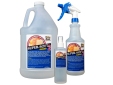

Your Wish List
 |
|
 |
|||||||||||||||||||||||||||||||||


All Content ©2026 VeneerSupplies.com™
Terms and Conditions | Privacy Policy | Contact Us